-
Comparison Framework: Digital Manufacturing Platform vs. Traditional Shop
-
Cost Transparency: Total Cost of Ownership, Not Just Sticker Price
-
Quality Assurance: DFM Feedback and Preventive Design
-
Delivery Certainty: Known Dates Beat Estimates
-
What About Automating Laser Welding Processes?
- Choosing Between Fictiv and Traditional Manufacturing
Six years ago, I took over procurement for our manufacturing budgets. Since then, I’ve tracked every order, every invoice, and every rework request in a spreadsheet that has become something like a second brain. Maybe 300 orders. Maybe 280, I’d have to check. When our team debated whether to move our CNC machining and injection molding projects to a fictiv digital manufacturing platform, I was skeptical. I’d spent six years negotiating with local vendors and thought I knew exactly how to manage them.
The comparison that follows isn’t about which option is better in some abstract sense. It’s about what the total cost of a manufactured part really looks like—and where the hidden risks sit. If you’re choosing between a traditional machine shop and a platform like Fictiv, these are the comparison points I wish I’d had from day one.
Comparison Framework: Digital Manufacturing Platform vs. Traditional Shop
I compared both options on three dimensions: total cost of ownership, quality prevention, and delivery certainty. I didn’t just compare sticker prices. I built a TCO spreadsheet that included quote accuracy, setup fees, communication delays, rework, and expedite costs. To be fair, both types of suppliers can deliver good parts. The difference shows up in how much waste happens before that first good part arrives.
In 2023 alone, I analyzed $180,000 in cumulative spending across suppliers and product lines. Of the eight vendors we shortlisted for an injection molding project, three were eliminated before quoting because their previous invoices showed hidden fees. Another two dropped out after failing basic QC checks. That left us with a traditional shop and a digital platform.
Cost Transparency: Total Cost of Ownership, Not Just Sticker Price
The most obvious difference is quote transparency. A traditional shop usually lists the direct machining cost and the material. But the setup fees, deburring, inspection, and secondary operations are often estimated separately and arrive later. Platform quotes are generated by a fixed rules engine. With Fictiv, the quote includes processing, finish, and lead time before I commit.
Let me give you a concrete example. In Q2 2024, I needed 40 units of a machined bracket. The traditional vendor quoted $2,100. The fictiv machining quote was $2,400. I almost stopped right there—until I ran the TCO comparison. The traditional vendor added a $150 setup fee, $95 for deburring, and $70 for a certificate of conformance. That’s $315 in fees that didn’t appear in the original number. Fictiv’s $2,400 included an inspection report. The difference was only $15—and the platform removed three hours of back-and-forth.
Now, I’m not arguing that platforms are always cheaper. Sometimes they’re not. But they are more predictable. And predictability is part of procurement cost.
One process gap we found was the lack of an approval chain for urgent orders. Someone would call a vendor, ask for express service, and the fee would show up on the invoice two weeks later with no one raising a flag. The third time it happened—a $550 surprise fee, to be exact—I realized the problem wasn’t the vendor. The problem was our missing workflow. Fictiv’s platform forces you to approve all charges during checkout, which is essentially a built-in approval chain.
Per FTC guidelines (ftc.gov), advertised pricing should be truthful and not misleading. I don’t think traditional shops intend to mislead, but their process relies on human guesswork. The same part can get a different fee depending on who answers the phone. Platform pricing is more consistent because the rules are the same for every buyer.
Quality Assurance: DFM Feedback and Preventive Design
This is where the prevention-over-cure argument plays out. In traditional manufacturing, the design review often happens after you’ve sent the files—and sometimes after the first part is cut. If the design includes a tolerance that the scheduled process can’t hold, you learn about it from a failed inspection, not from a warning before production.
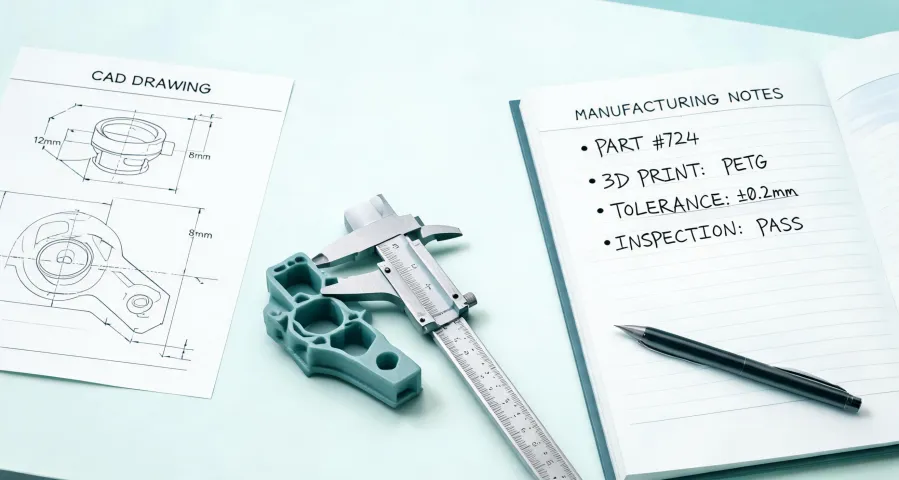
Fictiv’s digital manufacturing platform flags DFM issues directly on the CAD model before quoting. We had a part with a threaded hole too close to an interior wall. The platform automatically suggested moving the hole or increasing the wall thickness. That’s a five-minute fix in CAD. If we had sent that drawing to a traditional shop, the machinist probably would have adjusted the thread without asking. The result would have been a perfectly machined part that didn’t fit our mating component. A visually correct part that fails in assembly is worse than a flawed drawing.
I once told a vendor: use standard tolerances. What I meant was ISO 2768-m. What they heard was their own “good enough” tolerance. Result: we paid $1,850 to redo a press-fit part that didn’t fit the housing. That constant failure taught me to build a 12-point checklist before production. An automated DFM check is the same checklist, running before you spend anything.
5 minutes of verification beats 5 days of correction.
The biggest hesitation before we made the switch was simple: what if the platform doesn’t catch a quality issue that a machinist would catch? I calculated the worst case: a full rework at $4,000. The best case: smoother procurement on every order. The expected value pushed toward the platform, but the downside felt intimidating. In practice, the platform solved that concern by allowing third-party inspection on the order. The risk never materialized.
Delivery Certainty: Known Dates Beat Estimates
The third dimension is delivery certainty. A traditional shop might quote 2–3 weeks for machining. That’s a range, not a promise. A digital manufacturing platform generates a shipping date from capacity data and order load. That date is part of the order contract.
The shift feels similar to what happened in online printing. Years ago, I used a local print shop for everything. Then we started using online services like 48 Hour Print because they provide exact turnaround windows. The value wasn’t just speed; it was certainty. Fictiv brings that logic to manufactured parts. You know when the order will be delivered, so your assembly line can plan around it.
Even the USPS sets standard delivery timeframes and prices at usps.com so businesses can plan mailing operations. The same principle applies to custom manufacturing—delivery certainty is a feature, not an assumption.
What About Automating Laser Welding Processes?
One recurring question from our engineers is, how can I automate laser welding processes? The answer follows the same pattern. A manual welding setup has a lower upfront cost. But if the operator shifts alignment mid-batch, you’ll redo the welds. An automated CO2 laser cell gives you precise fixtures, repeatable settings, and documented inspection gates. That’s the prevention-over-cure principle applied to your own floor.
Automation isn’t always the right call, but the TCO math is the same. Start with clear specifications and quality gates, not just the machine purchase. If you already use a platform that gives you DFM feedback, you’ll see why prevention consistently beats rework.
Choosing Between Fictiv and Traditional Manufacturing
Choose a Platform Like Fictiv When…
You need quick prototypes, multiple iterations in one week, or documented quality. A fictiv digital manufacturing platform is a strong choice for that. The platform also provides streamlined injection molding solutions that save time on quoting and DFM checking. CNC machining, injection molding, and 3D printing are all managed through the same dashboard, which makes procurement simpler.
Choose a Traditional Shop When…
You need local pickup, have an unusual secondary operation, or rely on a specific machinist whose judgment you trust on-site. Local expertise is still valuable for complex assemblies with hands-on decisions.
My personal bias is clear. Fictiv machining workflows, combined with DFM checks, put preventive controls in place where we used to wait for the rework invoice. We still keep a local shop for urgent jobs, but for every planned order, I check the platform first.
The expected value of prevention still beats the cost of correction. And if you measure total cost of ownership, the comparison becomes much less abstract.
